Marketing
What Meta’s Ad-Free Subscription Means for Brands
Meta’s introduction of an ad-free subscription across Facebook and Instagram in the UK marks an important shift in the paid media landscape. As a digital marketing agency working closely with brands on performance marketing strategies, we see this as a change that will reshape how businesses approach social advertising, audience targeting, and campaign measurement.
The core implication is simple. Some users will now choose to pay for an ad-free experience, meaning they will no longer appear within advertising audiences. For brands, this reduces the size of the available audience and the number of behavioural signals that platforms rely on for targeting. As a result, paid media strategies must become more creative, more diversified, and more strategically structured.
Key Takeaways for Brands
There are several important takeaways from Meta’s “consent or pay” model:
• Users now choose between a free version of Facebook and Instagram with personalised ads or a paid subscription with no ads.
• A portion of users will disappear from advertising audiences, reducing targeting precision.
• Advertisers will be competing for visibility across a slightly smaller pool of users.
• Strong creative assets and consistent messaging will become even more important.
• Brands should consider expanding their paid media mix across multiple platforms rather than relying solely on Meta.
What Are Meta’s New Advertising Rules?
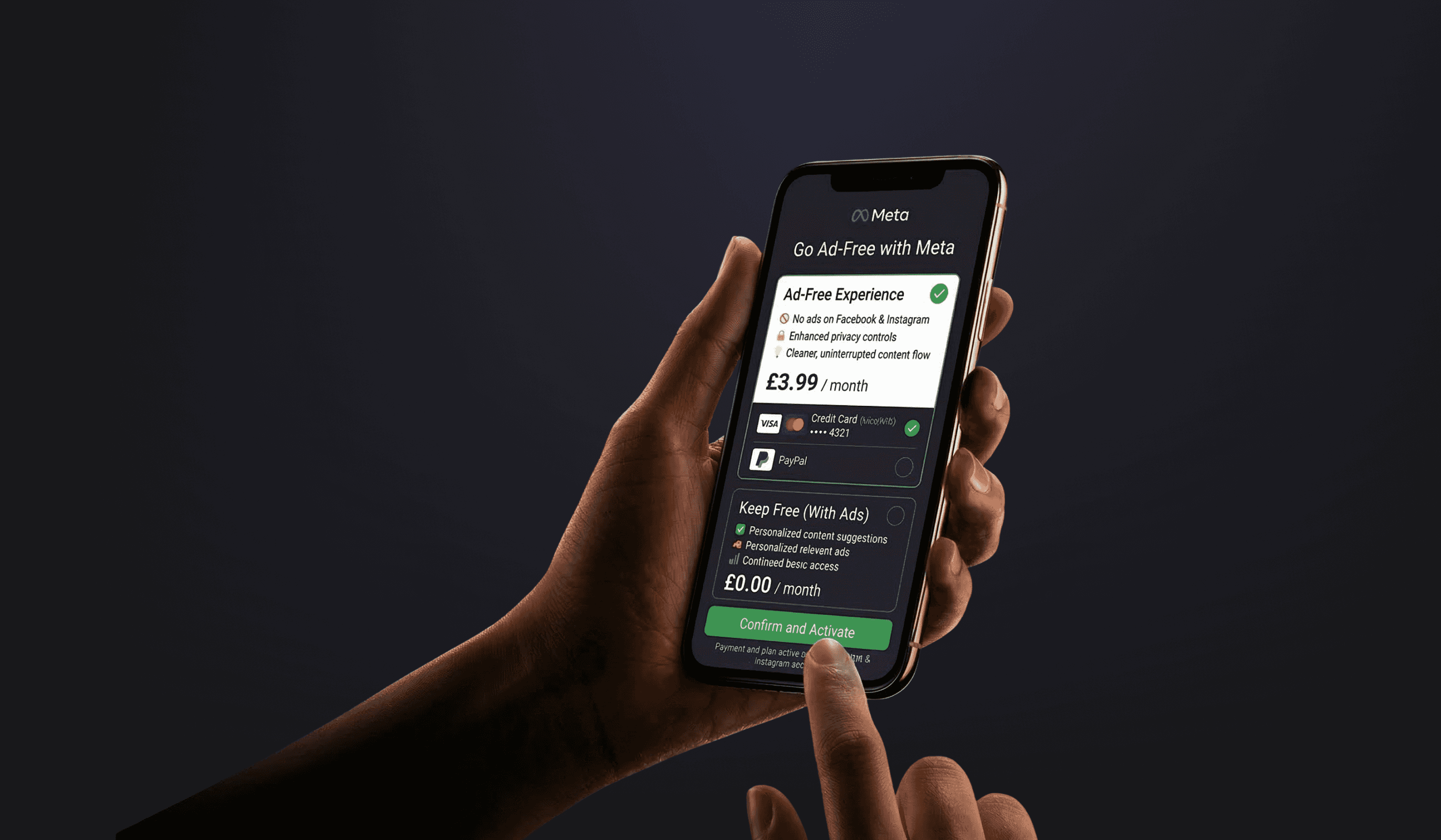
Meta’s new model gives users two clear choices. They can continue using Facebook or Instagram for free and see personalised ads, or they can pay a monthly subscription to remove advertising from their experience.
This subscription model was originally launched in the EU in 2023 and has now expanded to include the UK. Since early 2026, users have been prompted to either subscribe or consent to personalised advertising to continue using the platforms.
For advertisers, the result is a shift in the available audience pool and the signals used to optimise campaigns.
How the Ad-Free Subscription Works
Users who subscribe to Meta’s ad-free plan will not see advertisements across Facebook or Instagram, whether they are using mobile apps or desktop platforms.
While these users may still encounter branded content shared by creators or businesses they follow, these posts will not be targeted advertisements delivered through Meta’s advertising system.
There are also several limitations for users who choose the ad-free subscription. For example, subscribers cannot:
• Run ads or boost posts from their profiles
• Run ads for Instagram accounts
• Promote posts or Marketplace listings
• Participate in partnership ads
• Monetise content from their profiles
These restrictions reinforce the fact that subscribers are removed from the advertising ecosystem while their subscription is active.
What Happens If Users Don’t Subscribe?
Users who continue with the free version of Meta platforms will still see advertising within their feeds. In this case, Meta can use information such as content engagement, interactions, and browsing behaviour to personalise the ads they see.
Users will still retain control over their advertising preferences and can withdraw consent or adjust ad settings at any time.
For advertisers, these users remain the core audience pool for paid media campaigns.
How Much Does the Subscription Cost?
The ad-free Meta subscription currently costs:
Subscription Method | Price |
|---|---|
Instagram or the Facebook website | £2.99 per month for one account, plus £2 per additional linked account |
Instagram or Facebook app | £3.99 per month for one account, plus £3 per additional linked account |
Pricing varies depending on whether the subscription is purchased through the mobile apps or the web version of the platforms.
Why Has Meta Introduced This Model?
There are three main drivers behind the introduction of the ad-free subscription.
Regulatory Compliance
Meta’s model follows regulatory pressure around user data usage and advertising consent. Regulators require platforms to obtain explicit permission from users before using their data for personalised advertising.
The subscription option gives users a clear choice between consenting to advertising or paying for a privacy-focused experience.
Growing Demand for Privacy
User attitudes towards privacy have shifted significantly in recent years. Many users are more cautious about sharing data online, and the popularity of ad blockers, VPNs, and cookie restrictions reflects this trend.
The “consent or pay” model allows Meta to address these concerns while still maintaining a viable advertising ecosystem.
A New Revenue Stream
Subscriptions also provide Meta with an additional source of revenue beyond advertising. As advertisers diversify their marketing spend across multiple channels, platform subscriptions offer a more stable income model.
How This Will Change Paid Media
From a performance marketing perspective, the biggest impact will be the gradual reduction of available audience signals.
As some users move to the ad-free version, advertisers will be working with a slightly smaller audience pool. At the same time, the number of brands competing for those users will remain roughly the same.
This can lead to several outcomes:
• Increased competition for ad placements
• Rising advertising costs such as CPMs
• Reduced audience precision due to fewer behavioural signals
• Smaller retargeting pools
• Greater challenges around attribution and measurement
For brands that rely heavily on Meta advertising, this shift highlights the importance of building more resilient marketing strategies.
What Brands Should Focus On Now
At Mesmerise Media, we recommend several strategic adjustments to ensure paid media campaigns remain effective.
Invest in Strong Creative
With more brands competing for attention, distinctive creative will play a larger role in campaign success. Ads that are visually memorable and clearly aligned with brand identity are more likely to capture attention and drive engagement.
Consistency across colours, tone, messaging, and visual assets helps reinforce brand recognition even within crowded feeds.
Diversify Paid Media Channels
Relying solely on one platform is becoming increasingly risky. Expanding advertising strategies to include channels such as Google Ads, YouTube, TikTok, and other social platforms can help brands reach new audiences and maintain stable performance.
A diversified media strategy also helps reduce dependency on any single advertising ecosystem.
Align Paid Media With Other Marketing Activity
Paid media campaigns are most effective when they work alongside broader marketing efforts. Messaging used in advertising should be consistent with what users see across social media, email campaigns, and the website.
This creates a unified brand experience and reinforces marketing messages at multiple touchpoints.
Improve Tracking and Measurement
As privacy regulations continue to evolve, advertisers should ensure their tracking infrastructure is robust. Server-side tracking solutions, such as Meta’s Conversion API, help improve the reliability of conversion data while reducing reliance on browser-based tracking.
Build and Use First-Party Data
First-party data will become increasingly valuable as platform targeting capabilities evolve. Newsletter subscribers, customer lists, loyalty programme members, and website users all provide valuable audiences that brands can leverage for remarketing and audience modelling.
The Opportunity for Brands
While Meta’s subscription model introduces new challenges for advertisers, it also creates an opportunity for brands to rethink their marketing strategies.
Brands that invest in strong creative, diversify their paid media mix, and build their own customer data will be better positioned to maintain performance as the digital advertising landscape evolves.
Reviewing Your Paid Media Strategy
As audience targeting becomes more limited and competition increases, a well-structured paid media strategy becomes even more important.
At Mesmerise Media, we help brands design and manage performance marketing campaigns across platforms, ensuring advertising activity aligns with wider marketing efforts to maximise reach, engagement, and measurable results.
If you’re reviewing your advertising strategy in light of these changes, our team can help you build a resilient approach that continues to deliver growth.